A Family Weekend at Dhondenling, Karnataka's Little Tibet
Stupas, golden monasteries, curry momos and a misty morning, about four hours from Bengaluru.

Ajeet Singh Raina
· 7 min read
Dhondenling is a Tibetan settlement near Kollegal, close to the Karnataka and Tamil Nadu border. Most people know about Bylakuppe near Coorg. Dhondenling is smaller, quieter and much less crowded.
So we packed the car, and the whole family set off for a short trip. We had three simple goals: see the monasteries, eat good Tibetan food, and enjoy the drive. Dhondenling gave us all three, and a lot more.
Quick facts
- Where
- Near Kollegal, Chamarajanagar district, Karnataka
- From Bengaluru
- About 4 hours by road
- Nearest town
- Kollegal, about 40 km away
- Height
- About 3,345 ft above sea level
- Set up
- 1974, for Tibetan refugees
- Good for
- A slow weekend with family
The drive
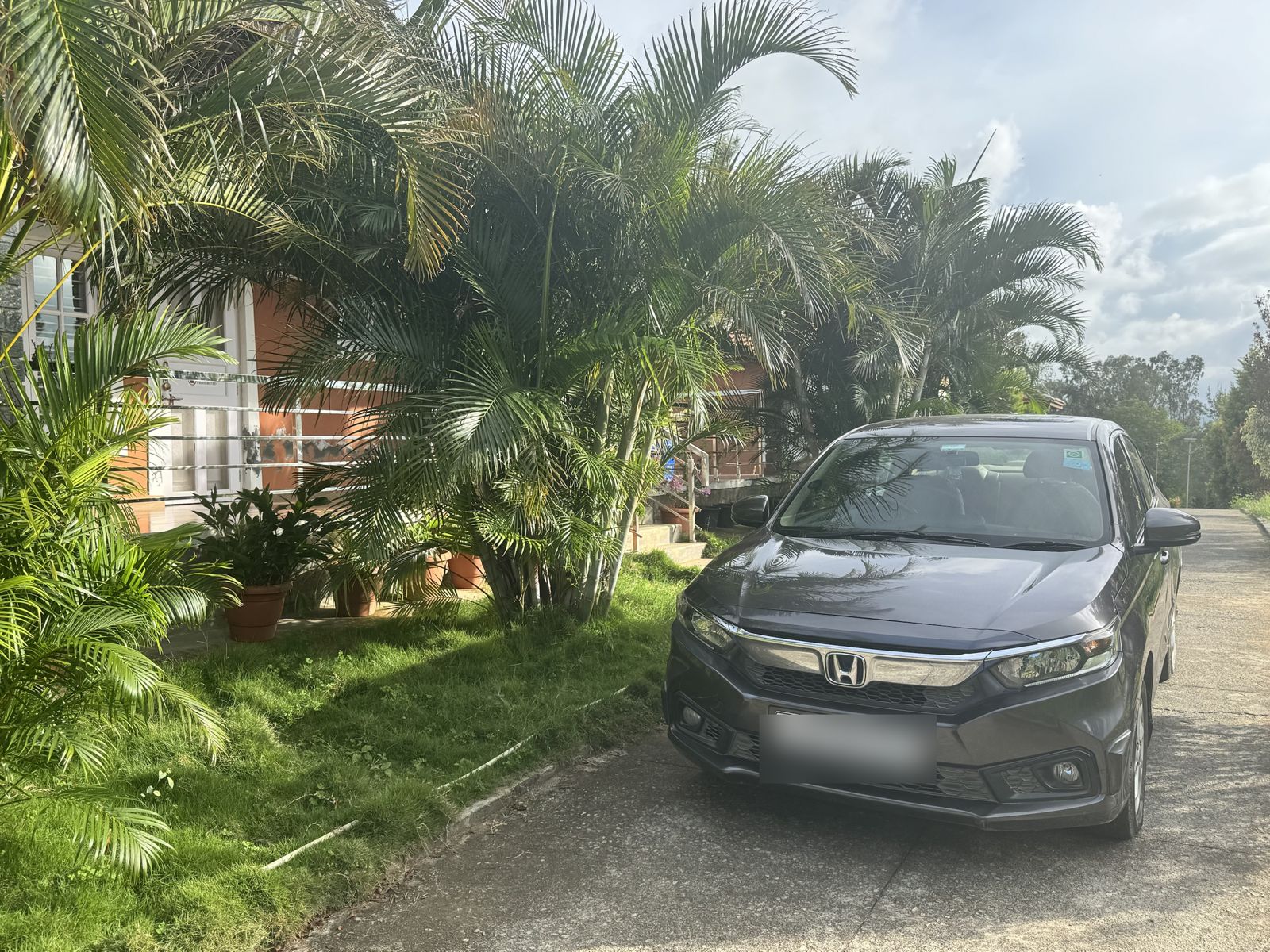
The drive is a big part of the fun. Once you leave the city traffic behind, the road gets quieter and greener. Near Kollegal the land opens up into wide farm fields with hills in the background. We went in late October, just after the rains, and everything was bright green.
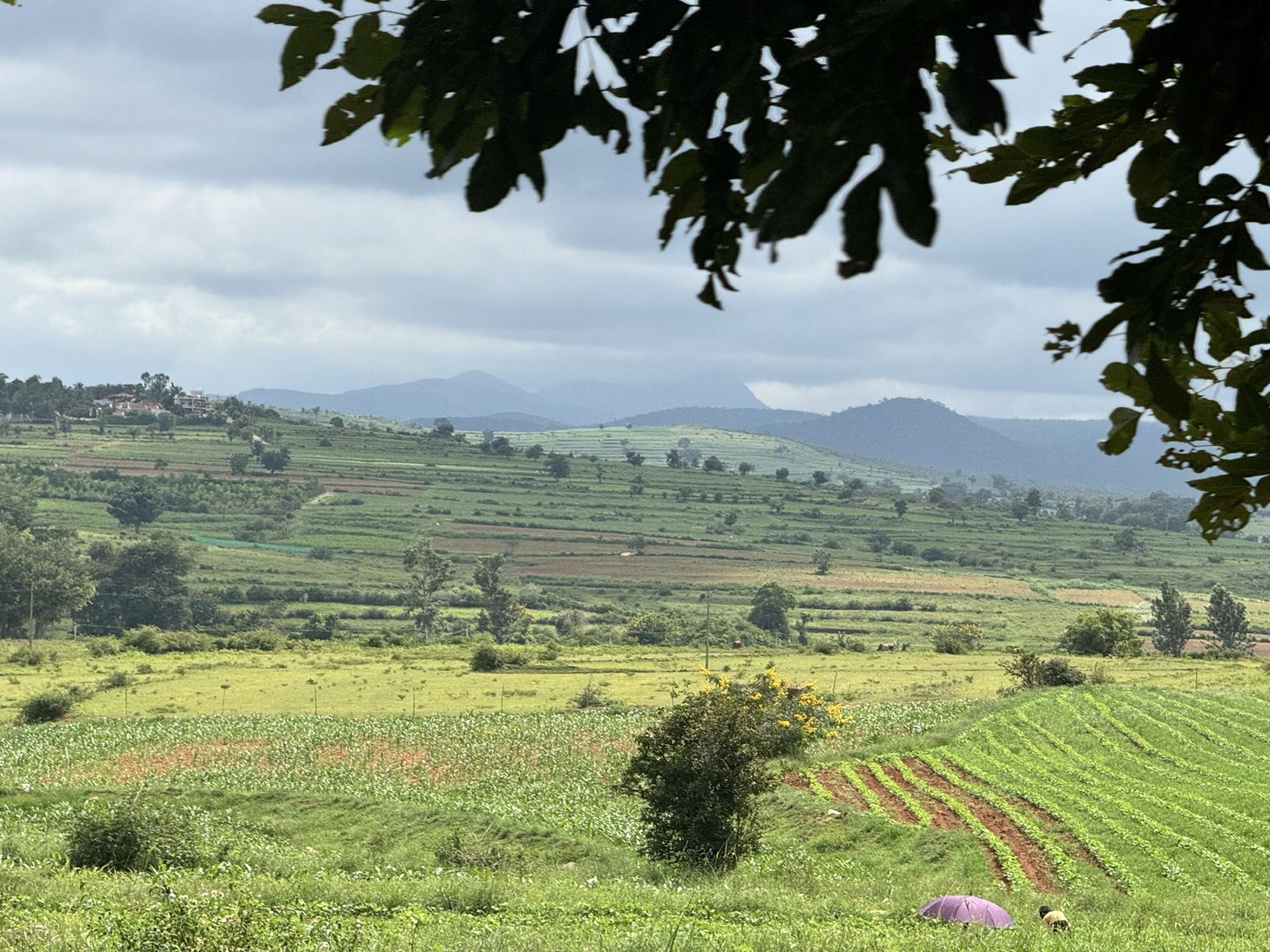
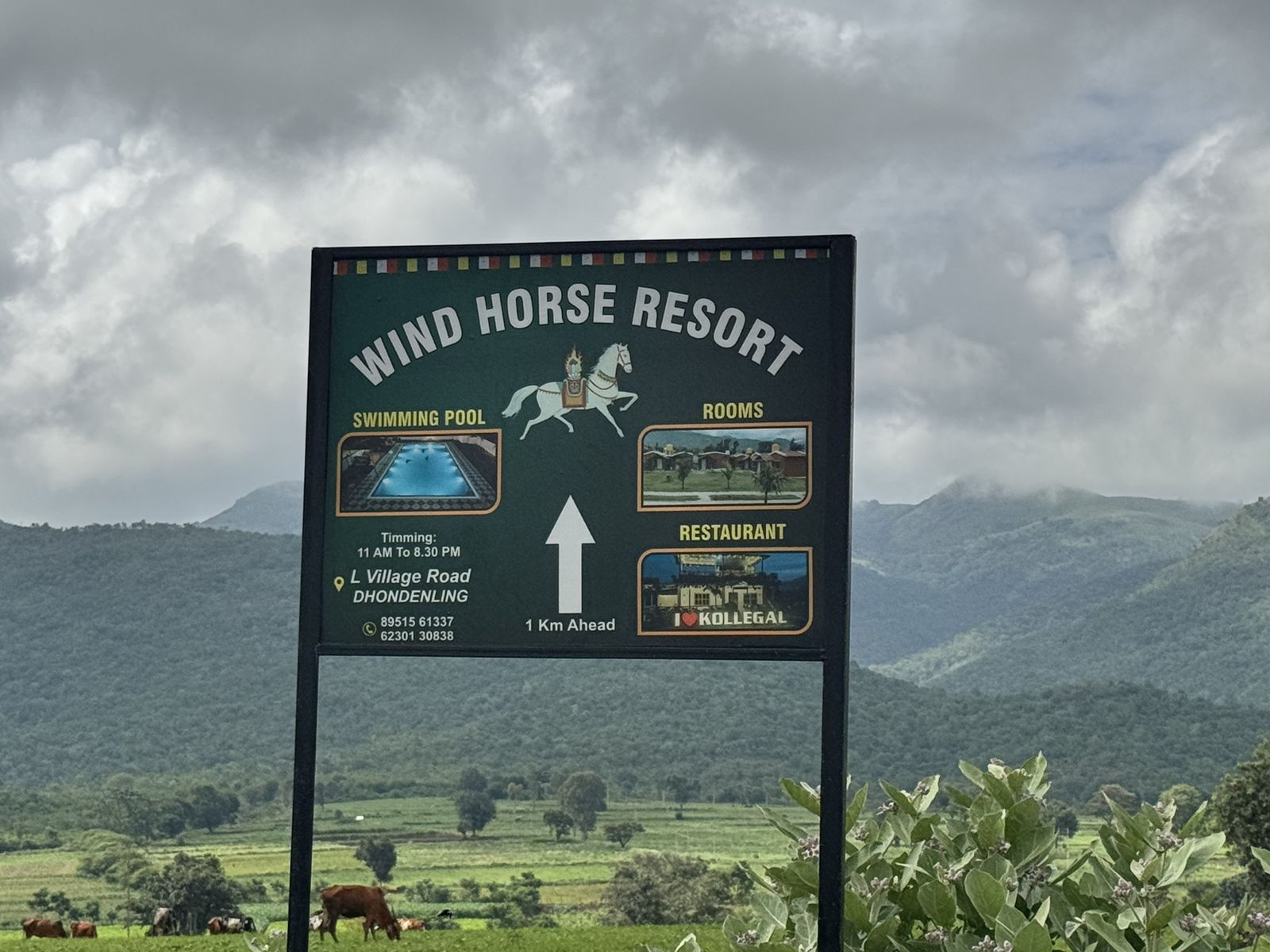
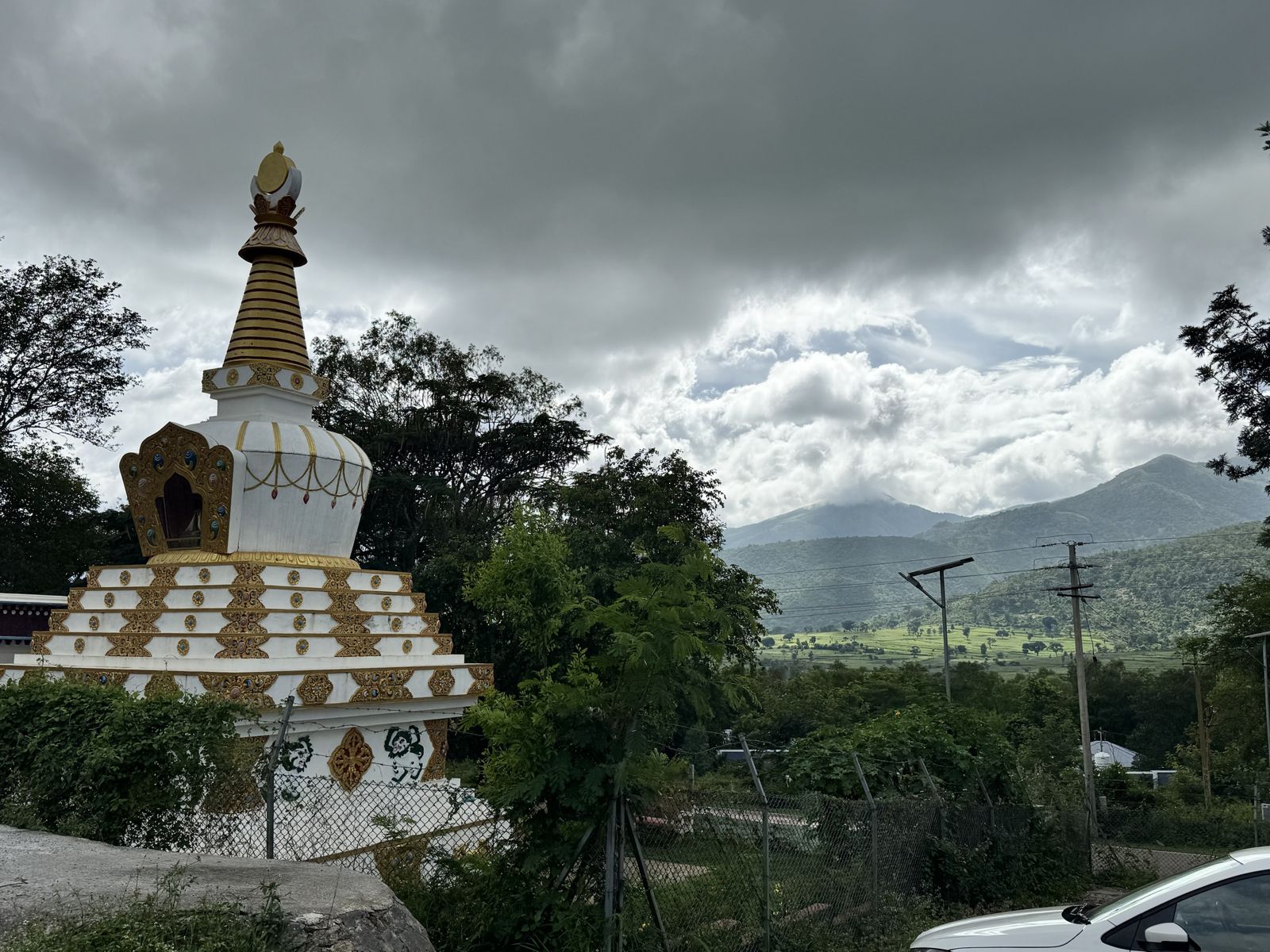
The settlement sits at the foot of the Biligiriranga Hills (BR Hills). Clouds kept rolling over the hilltops the whole time we were there. Even before we reached, we started seeing signs that this was a different kind of place. Prayer flag colours on road signs. Painted stones with Tibetan script by the roadside.
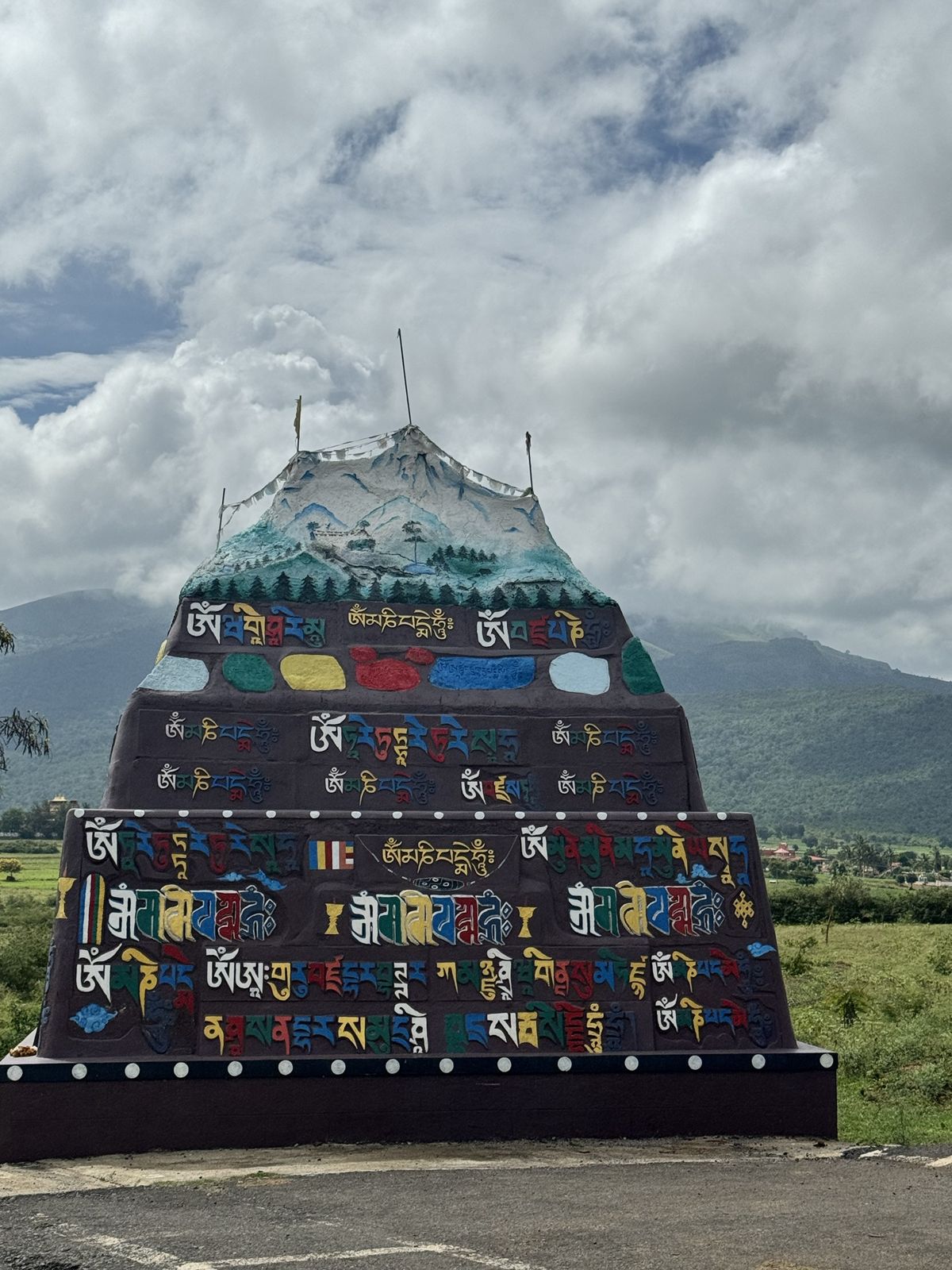
The mound of prayer stones was the first thing that made us stop the car. Every stone is painted with mantras in bright red, blue, green and yellow. Someone has even built a small snowy mountain on top, a little piece of Tibet in the middle of Karnataka farmland.
Finding our way around
Dhondenling is not one single village. It is spread out over many small villages, named with letters like T-Village, S-Village, Q-Village and L-Village. A big welcome board near the entrance lists them all, along with the monasteries, the school, the hospital and the main office, each with its distance.
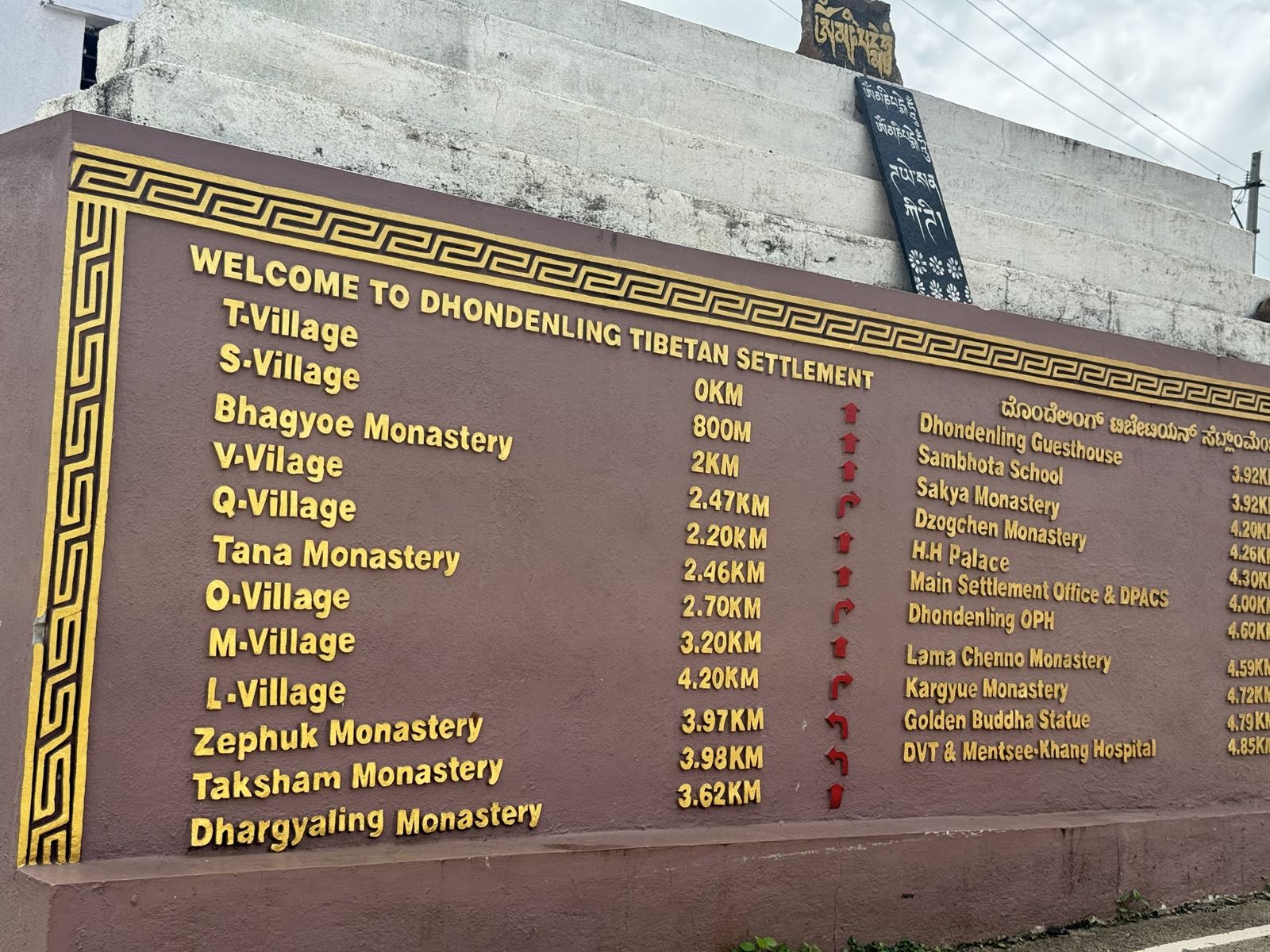
My tip: take a photo of this board before you go anywhere. The villages are spread out, and this board tells you exactly which way to turn for each place.
The monasteries and stupas
This was the main reason we came, and it did not disappoint. The settlement has several monasteries. The board lists Dzogchen, Tana, Sakya, Taksham, Dhargyaling and a few more. Each one is a short drive from the next.
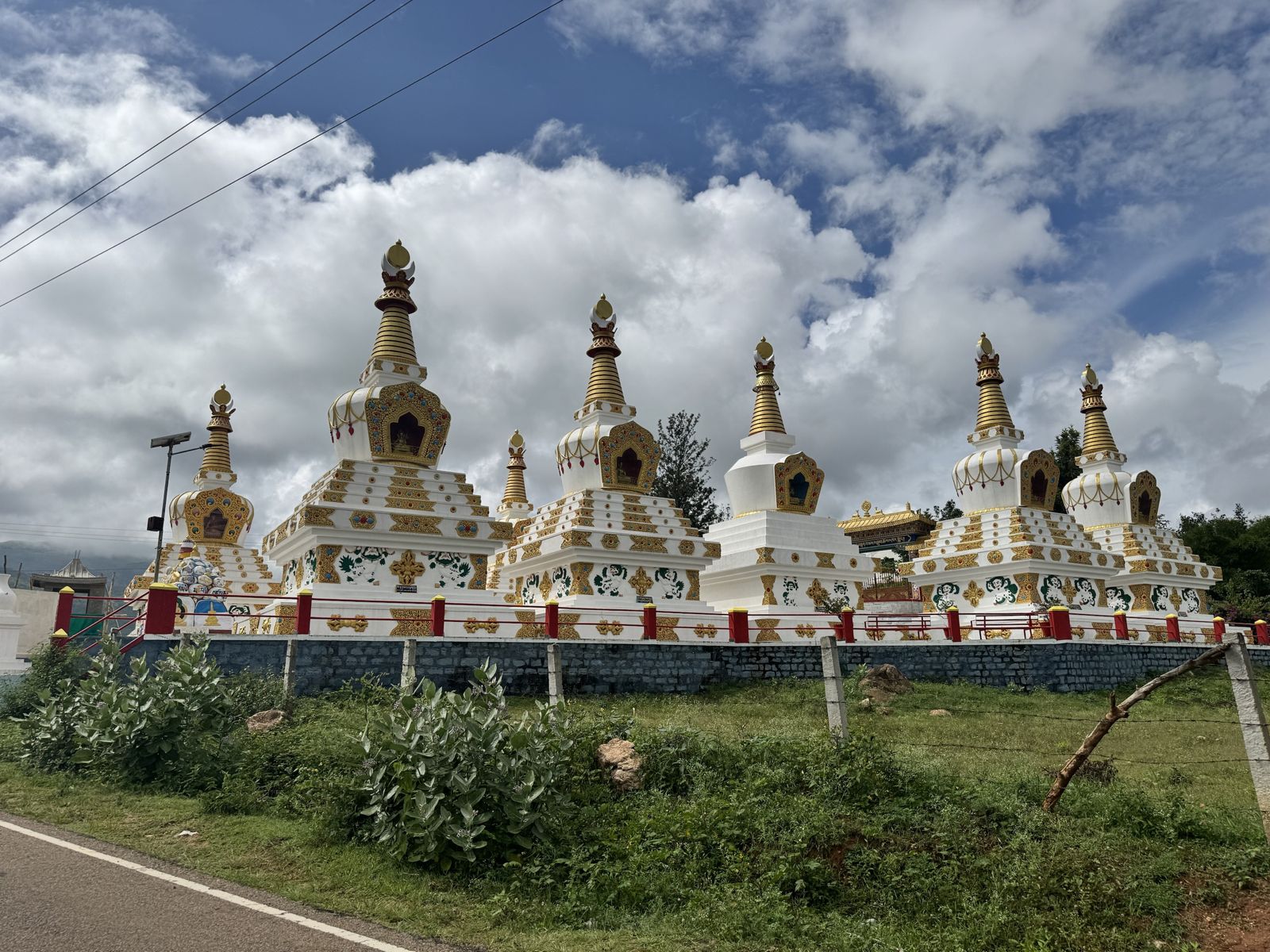
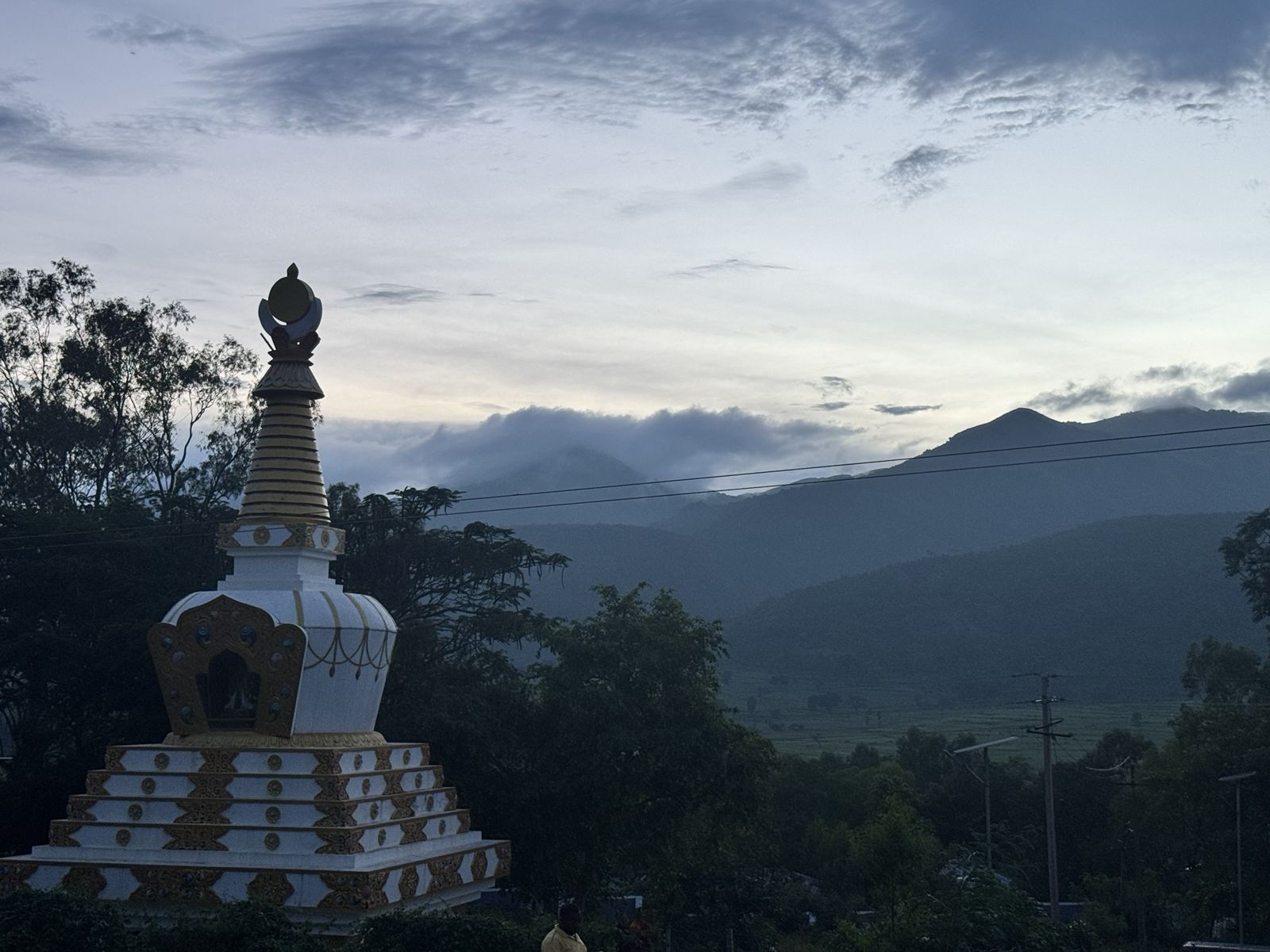
The first big stop for us was the row of stupas by the road. They are bright white with gold tops and gold patterns, and they look amazing against the blue sky. We walked slowly around them, clockwise, the way it is done.
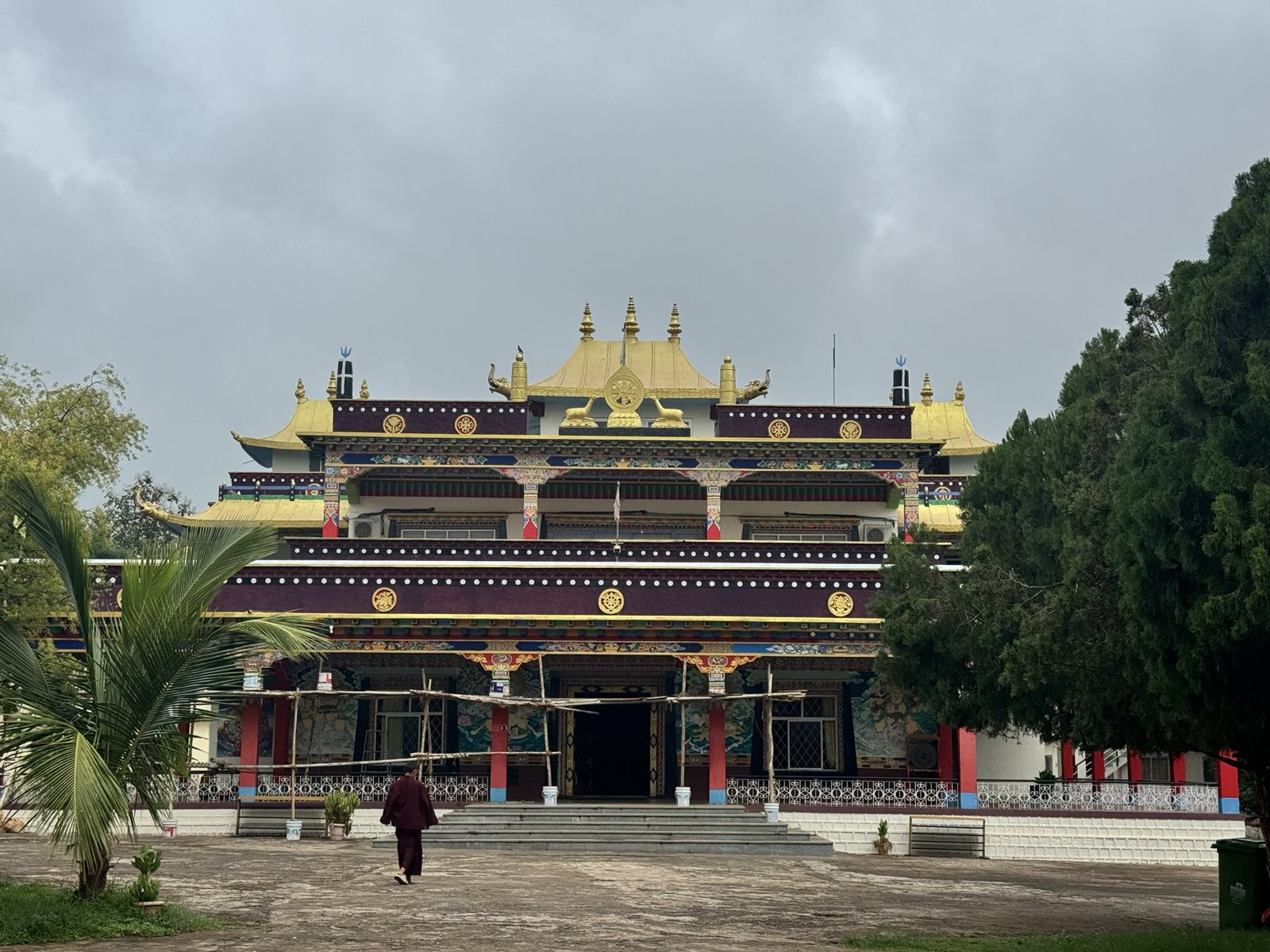
Then we went inside one of the monasteries. The building is huge, with golden roofs, a Dharma wheel with two deer on top, and walls painted in deep red, blue and gold. A monk was walking across the courtyard when we arrived. It was very quiet.
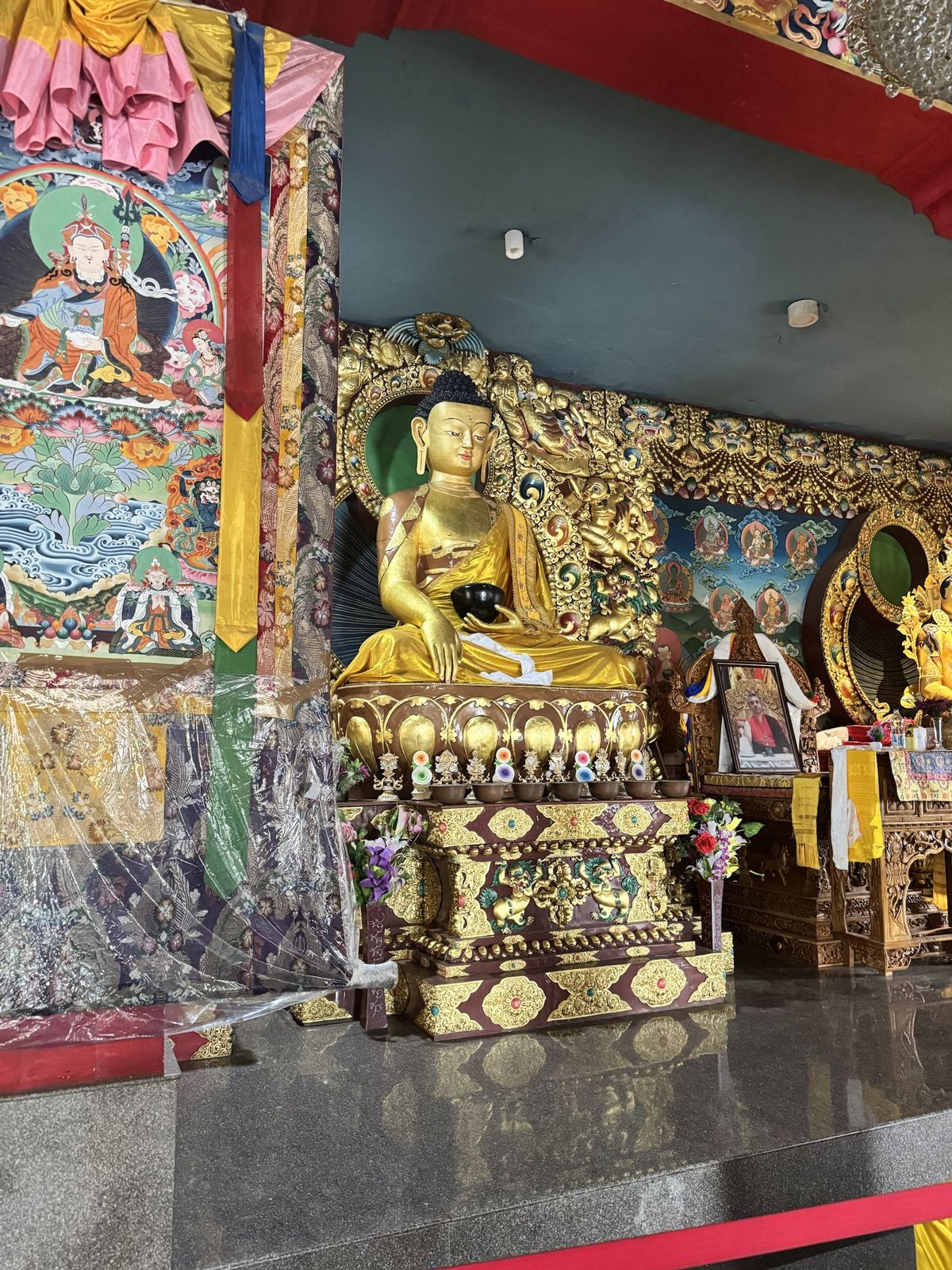
Inside the prayer hall, the detail is hard to describe. A large golden Buddha sits on a carved lotus seat, with rows of small offering bowls in front. The walls and pillars are covered in paintings of deities, flowers, clouds and dragons.
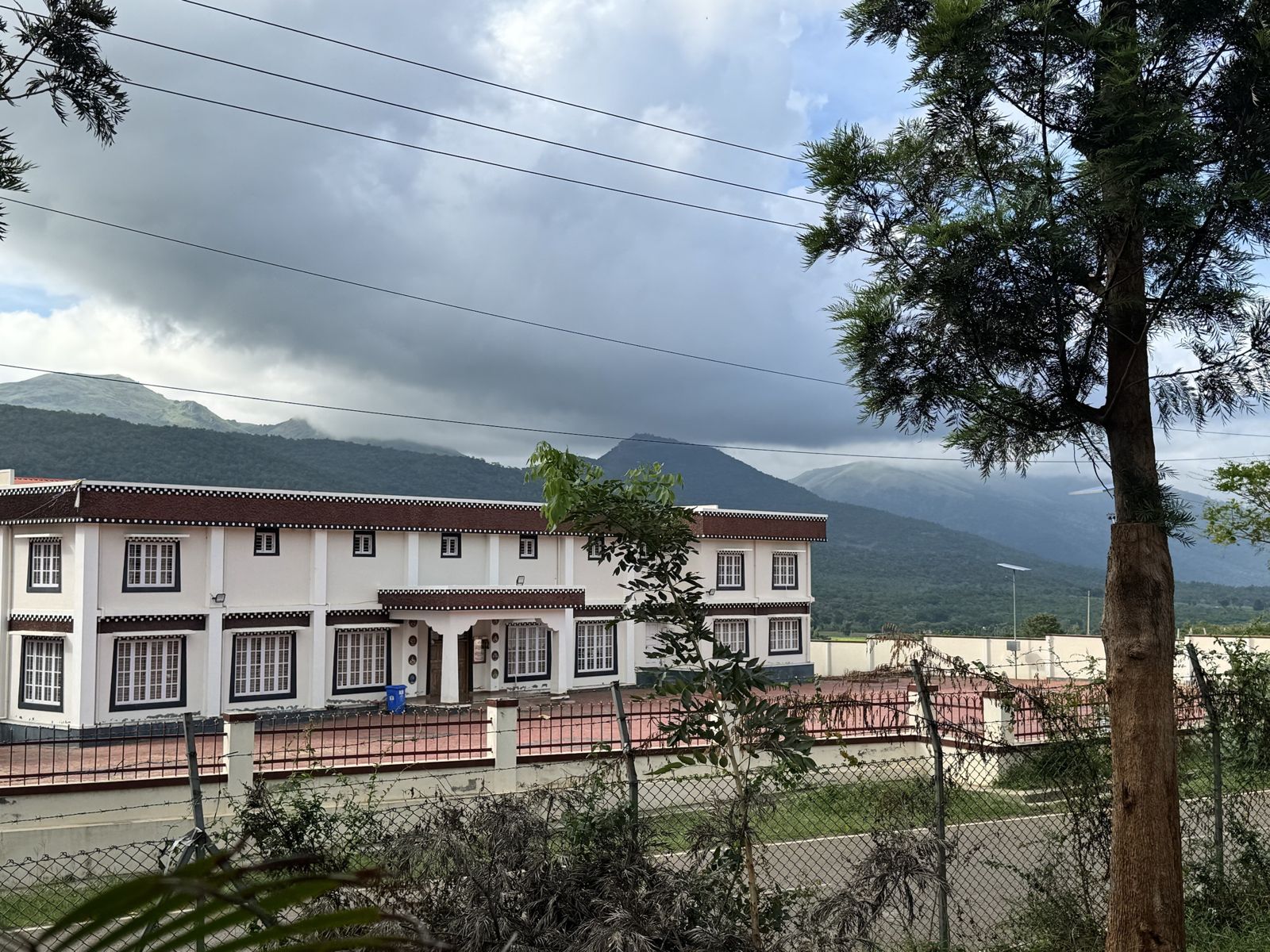
Around the settlement you also see newer buildings in the Tibetan style: white walls, dark window frames and a maroon band along the roof. With the cloudy hills behind them, they make a lovely picture.
The food
Now the best part, at least for me. We found a small restaurant with an open view of the fields and ordered a lot.
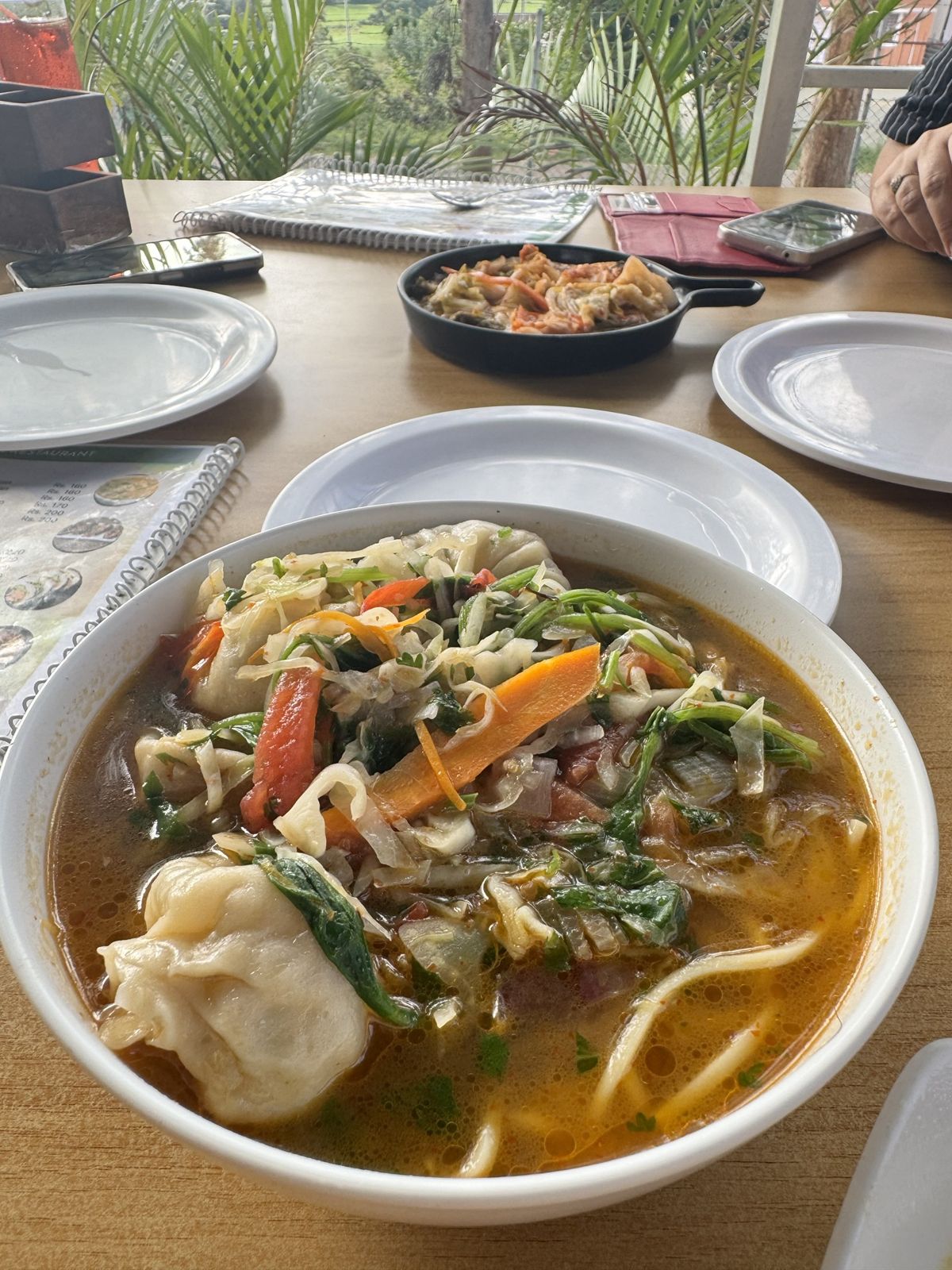
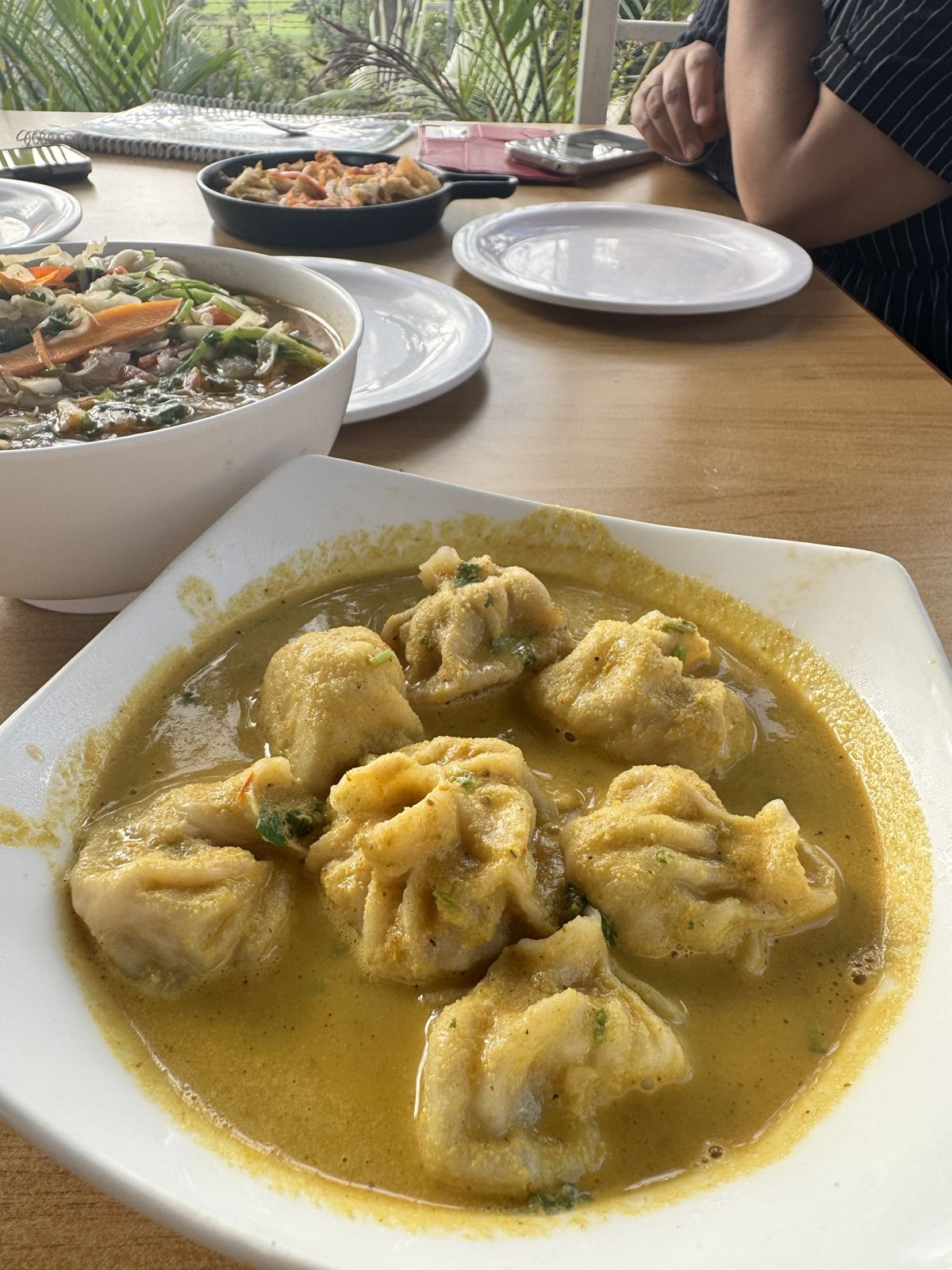
The noodle soup came in a huge bowl, full of vegetables, greens and a few momos. It was warm, simple and filling. The curry momos were something I had never tried before: soft momos sitting in a mild, creamy yellow curry.
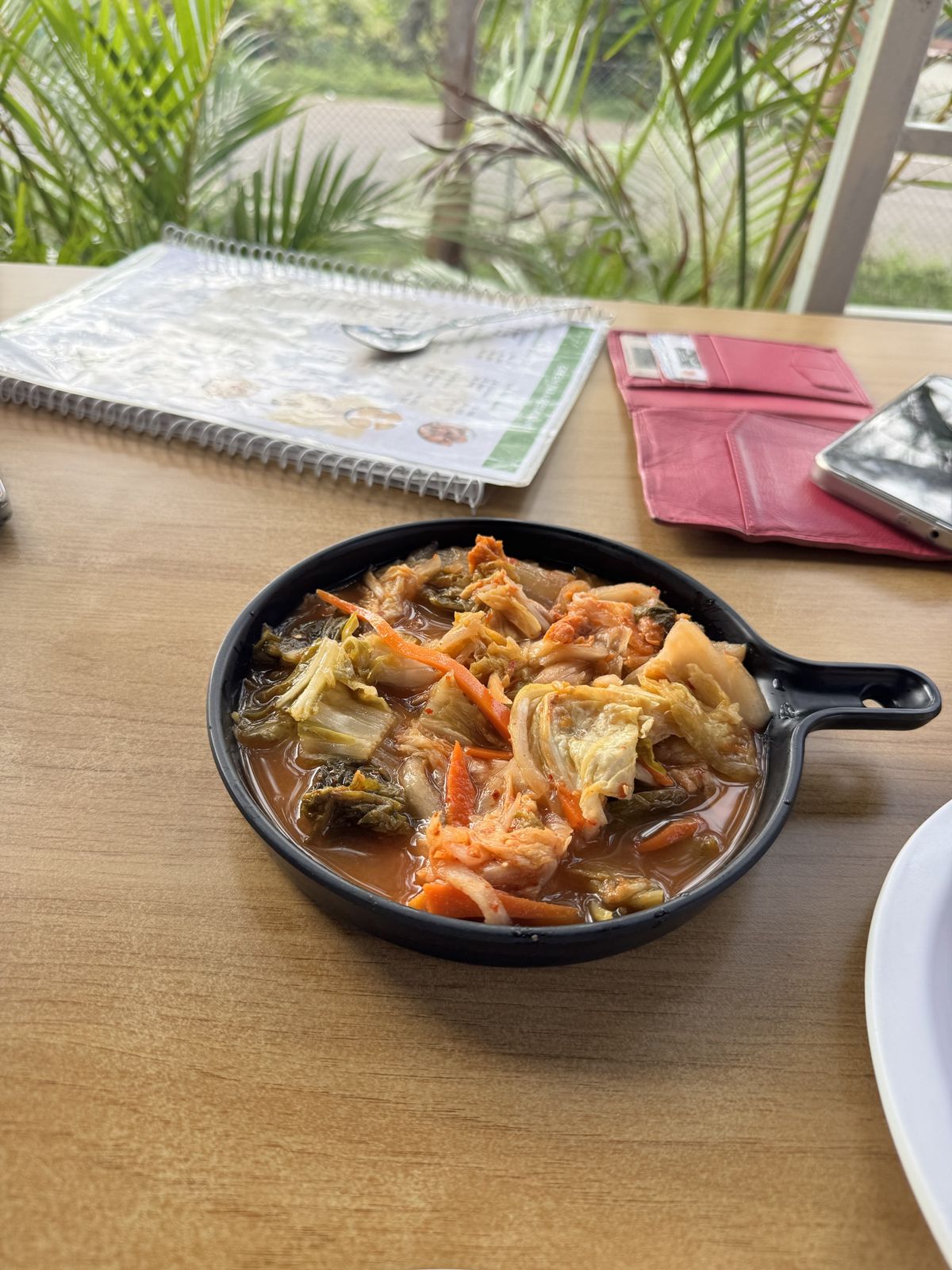

We also had a spicy, sour cabbage side dish that went well with everything. The biggest surprise was a thick sushi roll, stuffed with crispy fried vegetables and topped with spicy mayo. I did not expect sushi in a Tibetan settlement in Karnataka, but it was really good.
If you love momos, plan at least two meals here.
A misty morning
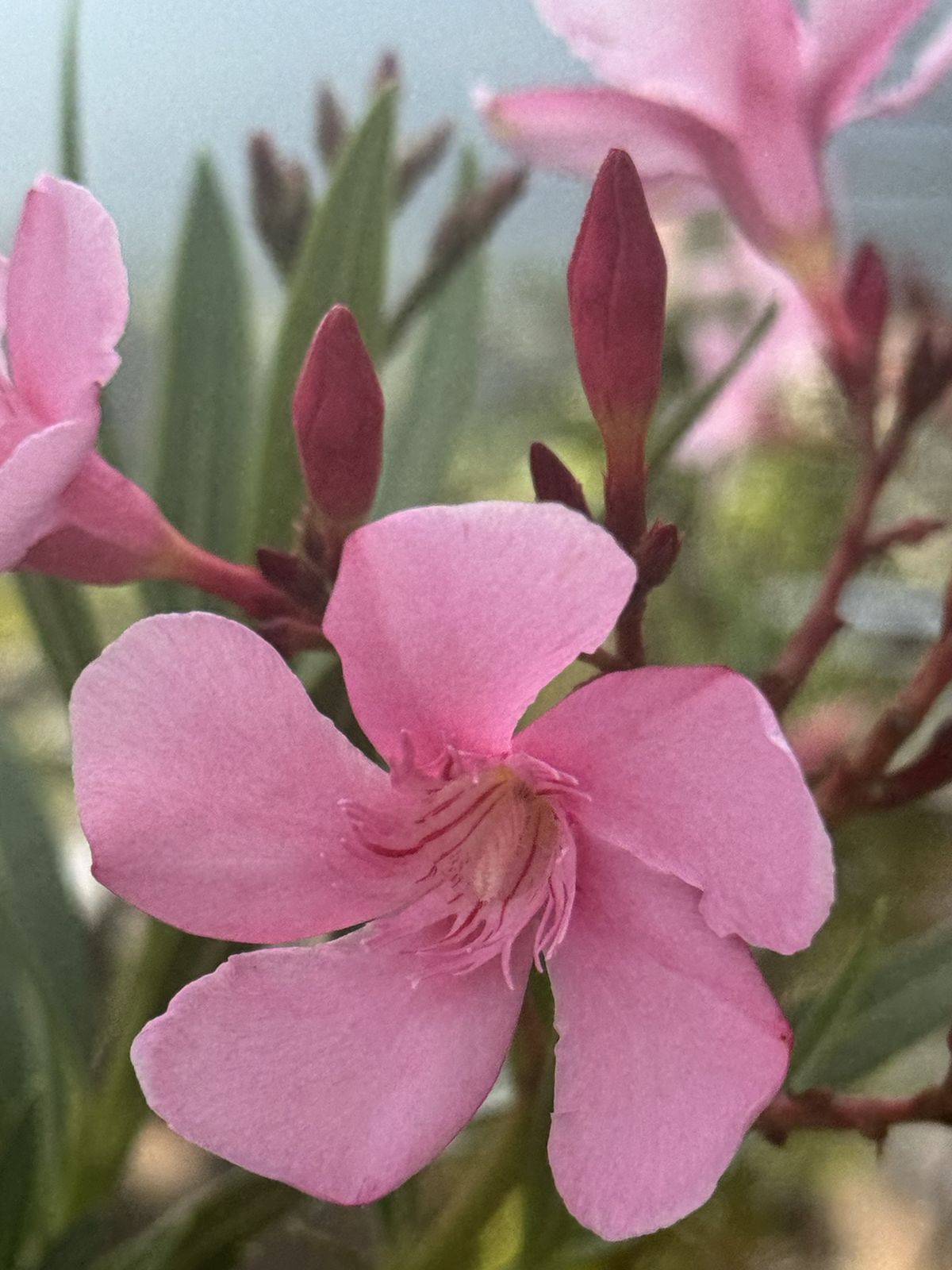
We stayed the night. The next morning, the whole place was covered in mist. The hills had disappeared, the grass was wet, and pink roses were blooming right outside. I just stood there and recorded it.
Before heading home, we stopped by the stupas one more time in the evening light. The sky turned blue and grey, the hills were wrapped in low clouds, and the gold tops of the stupas were the last thing still shining.
Tips if you plan to go
- Start early. It is about four hours from Bengaluru. An early start gives you a full afternoon at the monasteries.
- Check monastery timings. Some close early. Dzogchen Monastery is listed as open from 6 am to 3 pm, and Tana Monastery from 9 am to 6 pm.
- Photograph the welcome board. It is the easiest way to find your way between the villages and monasteries.
- Dress modestly and walk clockwise around stupas and prayer wheels. Ask before taking photos of monks or inside prayer halls.
- Stay one night if you can. The early morning mist over the hills is worth it.
- Come hungry. Momos, noodle soups and a surprise sushi roll are waiting.
Dhondenling was a reminder that you do not need to fly far to see something new. A few hours from Bengaluru, there is a small piece of Tibet, with prayer flags, golden roofs, quiet monasteries and warm food. We will be back.